The One Freedom They Couldn't Take: Man's Search for Meaning by Viktor Frankl
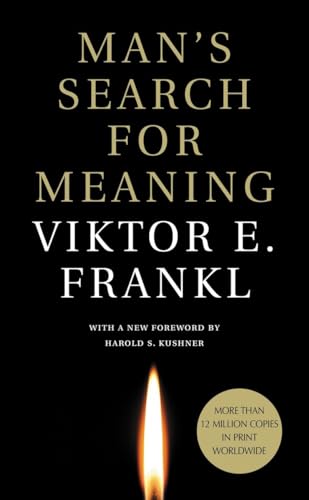
Cover shown for review. As an Amazon Associate, Coach Kev earns from qualifying purchases.
Viktor Frankl wrote most of Man's Search for Meaning in nine days, and he had earned every sentence of it the hard way, as a psychiatrist who was stripped of his career, his family, and his freedom, and shipped into the concentration camps of the Second World War. A line I return to constantly in the book is the one he built from watching who lived and who did not, that everything can be taken from a person except one thing, the last of the human freedoms, which is to choose your own response to whatever you have been handed. He does not offer that as a slogan, he offers it as a clinical observation drawn from a laboratory no one would ever choose.
What struck Frankl inside the camps was that survival did not track with physical strength the way anyone would expect, and the men who held on longest were often not the strongest bodies but the ones who still had something to live for, a person waiting, a book unfinished, a meaning that had not yet been served. He quotes Nietzsche to name it, that a person who has a why to live for can bear almost any how, and he watched that sentence prove itself in real time, watched men who lost their why simply stop, lie down, and not get up again. Meaning, in other words, was load-bearing, it was not decoration on top of a life, it was the beam holding the roof.
Out of that Frankl built logotherapy, his school of psychology, and its central claim is a quiet correction to the giants who came before him. Freud said we are driven mostly by the pursuit of pleasure, Adler said we are driven by the pursuit of power, and Frankl said that underneath both of those sits something more fundamental, a search for meaning, and that when that search comes up empty a person falls into what he called the existential vacuum, that particular modern emptiness where nothing is technically wrong and nothing feels worth doing either. A lot of the high-functioning people I work with know that vacuum intimately, they have the career and the competence and the quiet sense that they are running a life that does not mean anything to them.
The reframe that makes Frankl useful, rather than merely moving, is the way he flips the direction of the question. Most of us walk around asking what we want from life, what we are owed, what would finally make us happy, and Frankl says that is the wrong end of the telescope, that the more honest and more freeing question is what life is asking of you, right now, in this specific situation with these specific people and this specific pain. Meaning, on his account, is not something you find by arranging your circumstances until they please you, it is something you generate by responding to your circumstances as if your response matters, which it does.
I want to be careful here, because this idea gets cheapened constantly, and Frankl himself never cheapened it. He does not say that suffering is good, or noble, or necessary, and he is explicit that if a source of suffering can be removed you are obligated to remove it, that there is nothing virtuous about pain you could have avoided. What he says is narrower and far more useful, that when suffering is genuinely unavoidable, when the thing has already happened and cannot be undone, you still retain the freedom to decide what you make it mean, and that freedom is the one thing no circumstance can confiscate. That is the opposite of toxic positivity, it is honesty with a spine.
This is why Frankl sits so squarely inside what I call Data-Driven Zen. He is not asking you to feel grateful for the wreckage, he is pointing at the small gap that exists between what happens to you and how you respond to it, the same gap that every real practice of maturity lives inside. The event lands, the reaction fires, and in the sliver of space between those two things is the only freedom any of us reliably get, and Frankl proved, under conditions none of us will ever face, that the gap holds even when everything else has been taken.
So here is the rep, and it is deliberately small. The next time you hit something you cannot change, a loss, a diagnosis, a door that closed and will not reopen, notice the reflex to ask why this happened to you, and then set that question down, because it has no answer that will help you. In its place ask a different one, what is this asking of me now, what can I still be responsible to, what would it look like to meet this with something other than collapse. You are not pretending the pain away, you are locating the one move that is still yours to make.
Man's Search for Meaning is a short book, and it will take you an afternoon to read and a lifetime to finish, because the second half quietly hands you a job. If you want the full weight of it, the memoir and the psychology together, you can find it here: https://www.amazon.com/dp/080701429X?tag=cklu-ionos-20. Read it on a hard week and it does something rare, it does not tell you the hard week does not matter, it tells you that even here, especially here, what you do next is still yours to decide, and that is usually the exact thing a hard week makes you forget.