Option B Is Still an Option: Sheryl Sandberg, Adam Grant, and the Three Sentences Grief Writes for You
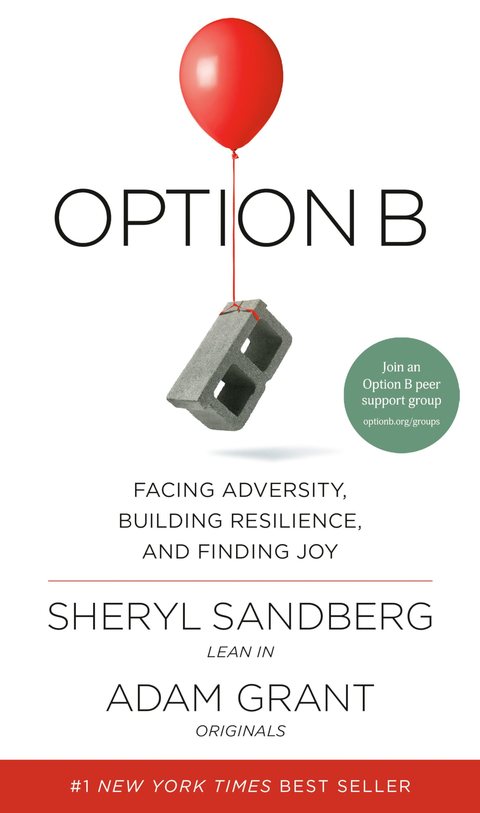
Cover shown for review. As an Amazon Associate, Coach Kev earns from qualifying purchases.
Sheryl Sandberg's husband died suddenly while they were away on vacation. The book she wrote afterward with Adam Grant is not the book many readers would expect from either of those names. Sandberg is known for Lean In and for running one of the larger companies on the planet, while Grant is an organizational psychologist at Wharton who writes about work. Option B is neither a business book nor a memoir exactly. It is an account of a person going through something devastating, with a researcher sitting beside the account explaining what is known about the mechanism.
The title comes from a moment in the book that is worth knowing before you open it. Sandberg was grieving that her children would not have their father present at an upcoming event, and a friend of hers, Phil Deutch, said that option A was not available, so they were going to kick the hell out of option B.
That line does more work than it first appears to, and it is worth sitting with rather than treating as a slogan. A great deal of the suffering capable people carry after a loss does not come from the loss itself. It comes from continuing to run a plan that requires a person, a body or a future that is no longer available. The plan keeps issuing instructions. The instructions keep failing. The person running them concludes that they are failing, when what is actually happening is that a set of steps is being executed against conditions that no longer exist.
The three P's, and why they are so difficult to catch
The tool at the center of this book is the three P's, which Grant takes from Martin Seligman's research on learned optimism. It is the reason the book earns a place on this shelf for anyone who wants something to do rather than something to feel.
After something bad happens, the mind reliably writes three sentences without being asked for them.
Personalization says this is my fault.
Pervasiveness says this ruins everything.
Permanence says it will always feel like this.
What makes these hard to catch is not that they are outrageous. It is that each one is usually a little bit true, and a sentence with some truth in it does not present itself as a distortion. If you had a hand in what happened, personalization is not lying to you, it is overstating a real thing until the proportion is wrong. If the loss touched a genuinely central part of your life, pervasiveness has something to point at. If the feeling has been constant for six weeks, permanence has evidence.
So you cannot dismiss them, and dismissing them is exactly what most well-meaning advice tries to do. What you can do is take them one at a time and test each against what you actually know.
Personalization tends to lose its grip under an honest accounting of what you controlled and what you did not, done in writing, because the accounting on paper almost never matches the accounting in your head. Pervasiveness loses its grip the moment you list what is still standing, and the list is always longer than the feeling suggested. Permanence loses its grip when you notice that feelings report today's weather rather than issuing next month's forecast, which is a distinction your nervous system does not make on its own and you have to make for it.
What the research says about how this usually goes
There is a second thing worth knowing here, and it comes from outside the book but supports its whole argument.
George Bonanno, writing in American Psychologist in 2004, reviewed the evidence on how people actually fare after loss and severe adversity, and found that resilience is a common outcome rather than a rare one. It is not universal, and it is not a reason to expect it of yourself on a schedule. It is common, though, and considerably more common than the clinical literature had assumed when that literature was largely built on people who had sought treatment.
That finding quietly reframes the whole undertaking. If recovery is an exceptional achievement performed by exceptional people, then a person in the middle of a bad year has good reason to doubt whether they are one of them. If recovery is the ordinary outcome, then the question changes from whether you are capable of it into what you are going to do this week, and that is a question a person can actually answer.
Where the book is weaker, and I would rather say it
Option B is written from a position of enormous resource. Sandberg had money, flexibility and a support network, along with the ability to take time. The book acknowledges this more than once, and Grant brings in research on people without those advantages, but the texture of the account is still the texture of a life with cushioning in it, and a reader without that cushioning will feel the gap.
I would not let that put you off it. The three P's work regardless of your circumstances, because they are a description of what your own mind does rather than a prescription requiring resources. Read the framework, use the framework, and read the memoir portions knowing whose life you are reading.
For Leaders
When someone on your team is inside a loss, the instinct is to say nothing rather than risk saying the wrong thing, and Sandberg is blunt about how that lands from the other side. The silence does not read as respect for privacy. It reads as indifference, or worse, as the loss being something shameful that the whole team has agreed not to mention.
Ask specifically rather than generally, because how are you doing invites the reflexive fine, while asking how this week has been compared with last week invites an actual answer. Offer specifically rather than generally, because let me know if you need anything places the work of asking on the one person in the room least able to do it. Then do it again in six weeks, which is the part that separates a decent manager from a memorable one. By then the support has usually evaporated, at the exact moment the numbness wears off.
For Individual Contributors
Write down the sentence your head keeps repeating about whatever you are carrying, in the words it actually uses, and then label which of the three P's it is. That is it. Naming the distortion you are running is a large share of the work, and it takes about ninety seconds.
The reason it works is that the three sentences derive their power from feeling like observations. The moment you write one down and label it as personalization, it stops being a report on reality and becomes a known pattern with a name, which is a considerably weaker position for it to argue from.
The rep
Write one sentence down and label which P it is. Do it once a day for a week and look at the pattern at the end of it, because many people run one of the three far more than the other two and have never noticed which one is theirs.
This is a thinking tool, not treatment. If the sentences are getting louder rather than quieter as the weeks go on, that is a reason to talk with a grief counselor or a therapist, not a reason to try harder alone.
Now the real work begins.
The book: Option B: Facing Adversity, Building Resilience, and Finding Joy by Sheryl Sandberg and Adam Grant (Knopf, 2017). You can find it here: https://www.amazon.com/s?k=Option+B+Sheryl+Sandberg+Adam+Grant&tag=cklu-ionos-20
Reference: Bonanno, G. A. (2004). Loss, trauma, and human resilience: Have we underestimated the human capacity to thrive after extremely aversive events? American Psychologist, 59(1), 20-28.