Quiet Is Not a Leadership Defect: Quiet, by Susan Cain
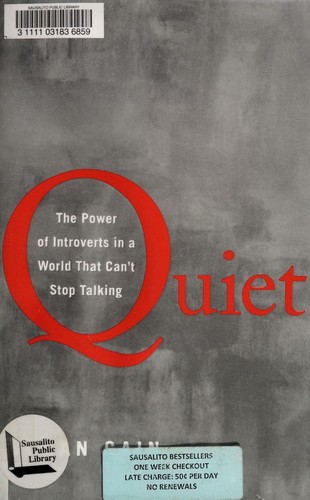
Cover shown for review. As an Amazon Associate, Coach Kev earns from qualifying purchases.
If you are the person who thinks before speaking in a meeting, you may already know how the room tends to read that pause. The quick answer often wins the discussion, the confident voice often gets the promotion, and the careful thought you were still shaping arrives after the decision has been made. This week's Friday Book Review is Quiet: The Power of Introverts in a World That Can't Stop Talking by Susan Cain, published in 2012, and it makes a careful case that the pause is not a flaw in you that needs fixing.
The premise: the room is tuned for one kind of person
Cain argues that schools, workplaces and leadership pipelines tend to reward the person who speaks first and with visible confidence, an expectation she calls the Extrovert Ideal. Under that ideal, being talkative reads as being capable, and quiet reads as having nothing to add. The book spends much of its length showing what that bias costs, both to the introverts who learn to perform a personality they do not have and to the groups that lose their ideas.
She is careful to describe introversion as a temperament and not a defect. Introverts, in her telling, tend to prefer less stimulation, think before they speak and recharge alone. None of that is shyness, which is a fear of social judgment, and an introvert can be socially confident while still needing quiet to do their best thinking.
What the research says
One study speaks directly to the leadership side of her argument. In a 2011 paper in the Academy of Management Journal, Adam Grant, Francesca Gino and David Hofmann asked whether groups actually perform better under extraverted leaders. In a field study of pizza stores, stores whose leaders were rated high in extraversion earned higher profits when their employees were passive. The pattern reversed when employees were proactive, and those stores did better under less extraverted leaders.
A laboratory study then reproduced the pattern. Passive groups performed better when the leader acted extraverted, and proactive groups performed better when the leader acted more reserved. The authors explain it through receptiveness, meaning that extraverted leaders tended to be less open to ideas coming up from the team. The lesson is not that quiet people make better leaders, it is that the right leadership style depends on who is in the room.
Where the book is weaker
Quiet is a persuasive book, and it leans on stories and selected studies more than on a systematic review of the evidence. Introversion and extraversion are a range that everyone sits somewhere on, and many people land near the middle, so the book's two-camp framing can be too neat. The Grant study is also two studies, one correlational and one in a lab, which makes it a strong signal and not a settled law of leadership. A reader can come away with a new label for themselves, and a label can explain behavior without changing anything.
The book is also not about mental health. If avoiding people comes from fear rather than preference, or if social situations leave you anxious or low most days, that is worth raising with a doctor or licensed counselor, because social anxiety is treatable and different from temperament.
For Leaders
Audit how ideas reach you. If the meeting is the only channel, you are mostly hearing from the people who think out loud fastest. Send the question ahead of time, ask for written input before the discussion and leave a pause after you ask for objections. The Grant study suggests one more habit, which is to talk less when your team is full of people with ideas, because your style may be what decides whether those ideas surface.
For Individual Contributors
If you do your best thinking after the meeting, use that instead of fighting it. Ask for the agenda in advance, prepare one point you want to make and say it early, before the discussion sets. Follow up in writing with the fuller version of your thought, because a clear written note often carries further than the quick answer did in the room.
The rep
This week, pick one meeting where you usually stay quiet. Write down one point beforehand and make it within the first ten minutes, then send a two-line follow-up afterward. Notice whether the point landed differently when it arrived prepared, and be willing to find that the room responded the same either way.
Now the real work begins.
The book: Quiet: The Power of Introverts in a World That Can't Stop Talking by Susan Cain (Crown, 2012).
Reference: Grant, A. M., Gino, F., & Hofmann, D. A. (2011). Reversing the extraverted leadership advantage: The role of employee proactivity. Academy of Management Journal, 54(3), 528-550. https://doi.org/10.5465/amj.2011.61968043
Stay in the loop
Get new posts by email
Pick what you want and I will send it to you.
I will email you the posts you tick, about once a week. You can change what you get or leave from the bottom of any email. Your address stays with me and my email service, Kit.