The Harshest Voice in the Room Is Yours: Why Self-Compassion Is Really About Standards
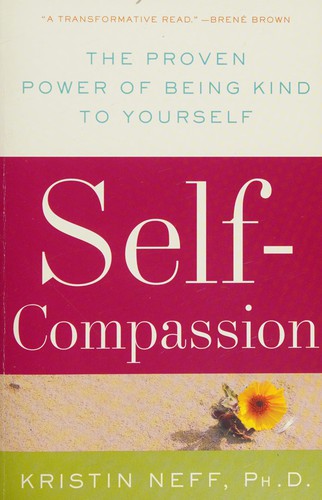
Cover shown for review. As an Amazon Associate, Coach Kev earns from qualifying purchases.
Kristin Neff is a developmental psychologist at the University of Texas at Austin, and she is the researcher most responsible for turning self-compassion from a soft, vaguely spiritual idea into something with an actual measurement scale, a body of published studies, and a mechanism you can point to. Self-Compassion: The Proven Power of Being Kind to Yourself is the book-length version of that research, and it belongs in the Life Uncensored library because it goes after a belief almost every high performer holds without examining it, that the harsh internal voice, the one that calls you lazy and stupid and not enough the moment you fall short, is the thing keeping your standards high. Neff's entire body of work says the opposite. The voice is not maintaining the standard. It is taxing the very system that would otherwise meet it.
I want to head off the obvious objection early, because it is the one I hear first every time I bring this book into a coaching conversation, which is that self-compassion sounds like an excuse to go easy on yourself, to lower the bar and call it healing. Neff addresses this directly and it is worth taking seriously rather than skimming past: her research distinguishes self-compassion from self-esteem, and from simple self-indulgence, along a specific axis. Self-esteem in her data is frequently contingent on winning, on comparison, on being better than someone else, which makes it fragile and occasionally narcissistic under threat. Self-compassion, by her definition, has three components, treating yourself with the same kindness you would offer a struggling friend, recognizing that failure and inadequacy are part of a shared human experience rather than a personal defect, and holding your own pain in balanced awareness instead of either suppressing it or drowning in it. None of that is permission to stop trying. It is a different fuel source for trying.
The mechanism is where this stops being a nice sentiment and becomes something mechanical enough to use. Neff's 2003 paper in Self and Identity, which introduced the Self-Compassion Scale still used across hundreds of subsequent studies, found self-compassion correlated with lower anxiety and depression and higher life satisfaction, independent of self-esteem. The physiological explanation lines up with what we already know about threat response: self-criticism activates the same sympathetic nervous system machinery your body uses for an actual external threat, the cortisol response, the narrowed attention, the fight-or-flight bias toward defense instead of learning. You cannot problem-solve well while your own nervous system is treating you as the predator. Self-kindness, by contrast, is associated with activation of the parasympathetic system, the same calming, caregiving circuitry that responds to a friend in distress, and a calm nervous system is a better substrate for actually fixing the mistake than a threatened one is.
The pattern I see constantly in high-performing clients is a person who has fused their self-criticism with their competence so tightly that they cannot imagine one without the other, who genuinely believes that if they stopped being cruel to themselves after every mistake, they would stop caring about the mistake at all and standards would collapse. What actually happens when people practice self-compassion instead, according to Neff's data, is not lower standards. It is more accurate self-assessment, because you are no longer so busy managing the emotional fallout of your own judgment that you can look honestly at what went wrong. The self-critical version of you is spending half its processing power on shame management. The self-compassionate version gets to spend that same power on the actual problem.
The rep, and it is a genuinely small one: the next time you catch yourself mid-mistake today, say to yourself, out loud if you can manage it, the exact sentence you would say to a close friend who had just done the same thing. Not a watered-down version. The actual sentence, with the same warmth you would extend to someone you love who was standing in front of you having a hard day. You are not lowering the bar by doing this. You are checking whether the bar was ever the point, or whether the cruelty just got there first and called itself the bar.
For Leaders
This matters past your own head because a team absorbs how you talk to yourself faster than they absorb any policy you write about psychological safety. A leader who narrates their own mistakes with contempt, even quietly, even just in their own head where they think no one can hear it, is training a room to expect the same contempt when the mistake is theirs. You do not build a team that takes real risks by protecting them from your harshness while directing all of it inward. You build it by letting people watch you make an error and respond to yourself the way you would want them to respond to their own.
For Individual Contributors
The practice here is noticing the gap between how fast you would forgive a colleague for the exact error you just made and how long you are prepared to punish yourself for it. That gap is not information about how bad the mistake was. It is information about which voice you have let run unchallenged the longest, and the fact that it has been running that long is exactly why it feels like the truth instead of a habit.
This is not a book that asks you to feel better about failing. It asks you to notice that the version of you constantly on trial has never once produced a better outcome than the version of you that simply got back to work. Self-Compassion is grounded in real published research rather than affirmation-poster logic, and it is worth reading slowly: https://www.amazon.com/dp/0061733520?tag=cklu-ionos-20. The standard was never the problem. The prosecutor you assigned to enforce it was.