The Protector You Keep Trying to Delete
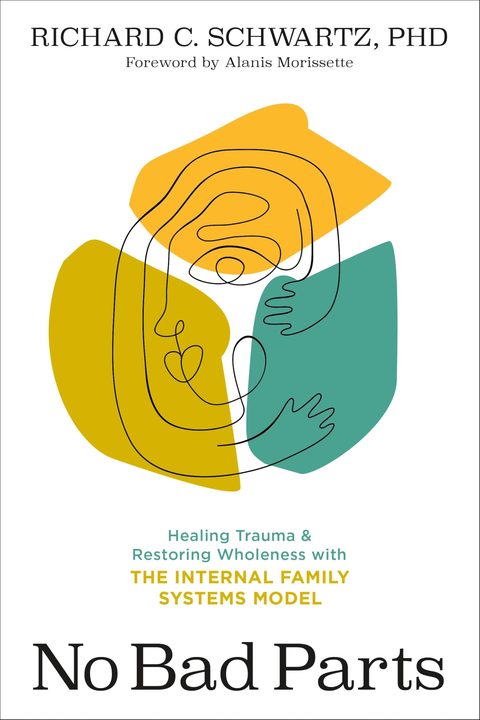
Cover shown for review. As an Amazon Associate, Coach Kev earns from qualifying purchases.
Almost every high performer I work with arrives carrying an inner voice they describe, without much hesitation, as the problem. It runs commentary while they work, it audits the work afterward, and it reliably gets loud at the exact moment something matters. They have tried to argue with it, they have tried to outrun it, some of them have spent years in one modality or another trying to reframe it into silence, and the campaign has never once won a round. That failure rate is the interesting part, because a strategy that never works on anybody is usually not a discipline problem. It is a targeting problem.
Richard Schwartz's No Bad Parts is a book about the targeting. Schwartz developed Internal Family Systems (IFS), a model that treats the mind not as a single voice with a defect somewhere in it, but as a system of sub-personalities, each with its own agenda, its own history, and its own job. The claim in the title is the claim that reorganizes everything else: there are no bad parts, only parts stuck in extreme roles.
The critic took the job for a reason
Under this model, the inner critic is not a malfunction and it is not an intruder. It is a protector. It took the job at a specific moment, for a specific reason, and the reason was almost always some version of safety. Somewhere back there, being harshly audited by you was genuinely less dangerous than being caught out by somebody else. A child who is criticized first by their own mind is a child who is never surprised by criticism from the room, and for that child, in that house, at that time, it worked.
Read that way, the voice stops being an enemy and becomes something closer to an employee nobody has reviewed in twenty years. It is still working the job it was hired for, under conditions that expired a long time ago, because nothing has ever formally told it the conditions changed. It is not being cruel to you. It is being diligent about a threat that is no longer in the building.
This is where the model earns its keep in practice, because it changes what you do next. If the critic is a defect, the only sensible response is removal, and removal is a war you have already lost repeatedly. If the critic is a protector, the sensible response is a conversation, and the opening question in that conversation is not "why are you like this" but "what do you think happens if you stop?"
That question does something that arguing never does. It asks the part what it is protecting. The answer that comes back is almost always a fear, stated plainly, and often stated in language that sounds much younger than the person saying it. A fear you can read is a fear you can negotiate with. A fear you have been shouting over for twenty years is a fear that just keeps recruiting.
What the evidence actually supports
IFS has become popular enough that it is worth being careful about what has and has not been demonstrated, because a model this intuitive attracts more certainty than its evidence base has earned.
The piece worth pointing at is Shadick and colleagues, publishing in the Journal of Rheumatology in 2013. They ran a randomized controlled trial of an IFS-based psychotherapeutic intervention with rheumatoid arthritis patients and reported improvements in self-assessed joint pain and depressive symptoms at follow-up. It is a real randomized trial, and it is described by its own authors as a proof-of-concept study with a modest sample. That is what it is, and I am not going to inflate it into something it is not.
So the honest framing is this: the parts model has a plausible mechanism, a growing clinical literature, and one small randomized trial with encouraging results. That is enough to take the approach seriously and to run it on yourself. It is not enough to claim it outperforms the established therapies, and Schwartz's book is stronger, not weaker, when it is read with that boundary in place.
For Leaders
The person on your team who is toughest on themselves is usually running a protector, and this is why the standard managerial response fails so consistently. You tell them to be kinder to themselves. Nothing changes. They may even get slightly worse, and you read that as stubbornness.
The part is not listening for encouragement. It is listening for evidence that the standard has dropped, because in its model, a dropped standard is what precedes the danger it exists to prevent. Generic reassurance reads to a protector as exactly that signal, which is why it triggers more vigilance instead of less.
Give it the evidence it will actually accept, which is specific and named. Not "you are doing great," but "the migration plan you wrote anticipated the rollback case nobody else raised, and that is the reason Thursday was uneventful." A protector can update on that. It cannot update on warmth alone, and a leader who only offers warmth will conclude, wrongly, that the person cannot be reached.
For Individual Contributors
The next time the critic starts, do not argue with it, because arguing is the move you have already run a thousand times. Ask it the one question instead. What do you think happens if you stop?
Then write the answer down, in whatever words arrive, without cleaning them up. You are looking for the fear underneath the criticism, and the raw phrasing carries more information than the tidy version. Many people are surprised by how young the answer sounds, and how specific it is, and how little it has to do with the piece of work that supposedly set it off.
You are not trying to fire this part. You are trying to find out what shift it thinks it is covering, so that something else can eventually take that shift.
The rep
Name one harsh inner voice. Ask what it is protecting. Write down what it says.
That is a ten-minute exercise, and it will tell you more about why a particular pattern has been immovable for a decade than another ten years of trying to argue it into the ground.
The book is No Bad Parts: Healing Trauma and Restoring Wholeness with the Internal Family Systems Model by Richard C. Schwartz, Ph.D. (Sounds True, 2021). You can find it here: https://www.amazon.com/dp/1683646681?tag=cklu-ionos-20
Live your life uncensored.
Reference: Shadick, N. A., et al. (2013). A randomized controlled trial of an internal family systems-based psychotherapeutic intervention on outcomes in rheumatoid arthritis: a proof-of-concept study. The Journal of Rheumatology, 40(11), 1831-1841.