The Richest Place on Earth: Why Die Empty Is Really a Book About Burnout
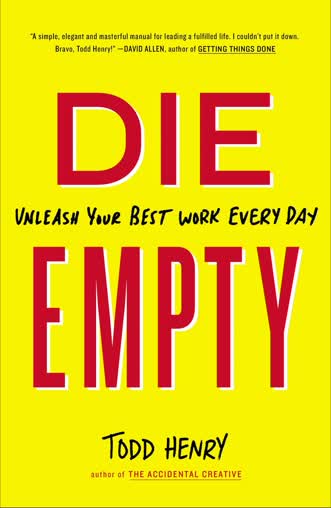
Cover shown for review. As an Amazon Associate, Coach Kev earns from qualifying purchases.
Todd Henry opens Die Empty with a line he attributes to a mentor, that the wealthiest place on the planet is the graveyard, because buried in the ground under all those headstones are the books never written, the businesses never started, the songs never recorded, the words never said, all of it still locked inside people who ran out of time before they ran out of themselves. It is a grim opening for a book that is ultimately about vitality, and it is exactly why I keep it in the Life Uncensored library, because it reframes a word everybody thinks they understand, which is burnout, and it reframes it in a way that actually explains the burnout I see most.
The common model of burnout is a volume problem, too much work, too many hours, the tank runs dry, and the prescribed fix is rest, a vacation, a spa weekend, more sleep. Sometimes that is genuinely the issue and the rest genuinely helps. But Henry points at a different and sneakier failure mode, and it is the one that quietly wrecks the high performers I work with, the people who are, by every external measure, killing it. Their burnout is not really from doing too much. It is from doing too much of work that does not matter to them, disconnected from anything they actually care about, and no amount of rest fixes that, because rest is the wrong tool for the wrong problem. You cannot recover your way out of misalignment. You can sleep for a week and wake up just as hollow, because the tank was never the issue, the fuel was.
Henry's word for the antidote is dying empty, and it is easy to misread, so let me be careful with it. It does not mean grinding yourself to dust, emptying the tank in the productivity-hustle sense, working until there is nothing left. It means the opposite. It means not carrying your best work to the grave still inside you, unspent, unrisked, unmade. The tragedy he is pointing at is not the person who worked too hard, it is the person who played it so safe, stayed so comfortable, deferred the meaningful work so long, that they died still full, full of everything they were too busy or too afraid to let out.
There is a mechanical way to see this that fits how I think about the mind. Meaningful work is not a drain on your system, it is a power source, it generates energy rather than only consuming it, which is why you can finish six hours on something that matters and feel more alive than when you started, and finish two hours on work that means nothing to you feeling like you got hit by a truck. When people describe burnout to me, I have learned to ask a second question underneath the tiredness, not just how much are you doing, but how much of what you are doing connects to anything you would be proud to have made. The answer to that second question is usually where the real fatigue is coming from, and it is a fatigue that a vacation cannot touch, because the moment they come back to the same disconnected work, the tank empties again on day one.
What I appreciate about Henry is that he does not romanticize quitting everything to chase passion, which is cheap advice that wrecks people with responsibilities. His answer is more grounded and more sustainable, it is about bringing more of yourself into the work you already have, doing it with more intention, more mastery, more of the part of you that actually cares, and steadily reclaiming the meaningful work you keep deferring to some imaginary later. He wants you to treat each day as a discrete unit, because the graveyard is not filled by one big surrendered dream, it is filled one deferred day at a time, each one feeling reasonable, each one adding to the pile.
So here is the rep, and it is a question you run at day's end rather than the start. Before you close out, ask yourself one thing: what did I have in me today that I did not let out. Not in a self-flagellating way, this is not another stick to beat yourself with, and if the honest answer some days is nothing, I spent it well, then good, that is a day you died empty. But often the answer is something specific and small, the honest thing you did not say in the meeting, the real work you kept pushing for the busywork that felt safer, the idea you sat on again. Naming it at day's end does two things, it keeps the ledger honest so the deferrals stop hiding, and it gives you one concrete thing to actually let out tomorrow.
This is not a straight line either, because the pull toward comfortable, safe, meaningless-but-manageable work is strong and it comes back every single day, and some days it wins. The goal is not to win every day, the goal is to stop letting the deferrals accumulate silently into a life that looks productive and feels empty. A day you spent on what matters, even imperfectly, is a day that will not end up in Henry's graveyard.
Die Empty is a short, punchy, genuinely motivating read, and if the tired you are carrying is the kind sleep has stopped fixing, it may be pointing at exactly this: https://www.amazon.com/dp/1591846994?tag=cklu-ionos-20. Rest is real and you should get it. But if you keep resting and keep waking up hollow, the problem was never the volume, it was the fuel, and that is a problem you fix by putting more of yourself in, not by pulling more of yourself out.