You Are Not a Bad Person, You Are a Routine That Never Shut Off: The Guilt Debug Journal
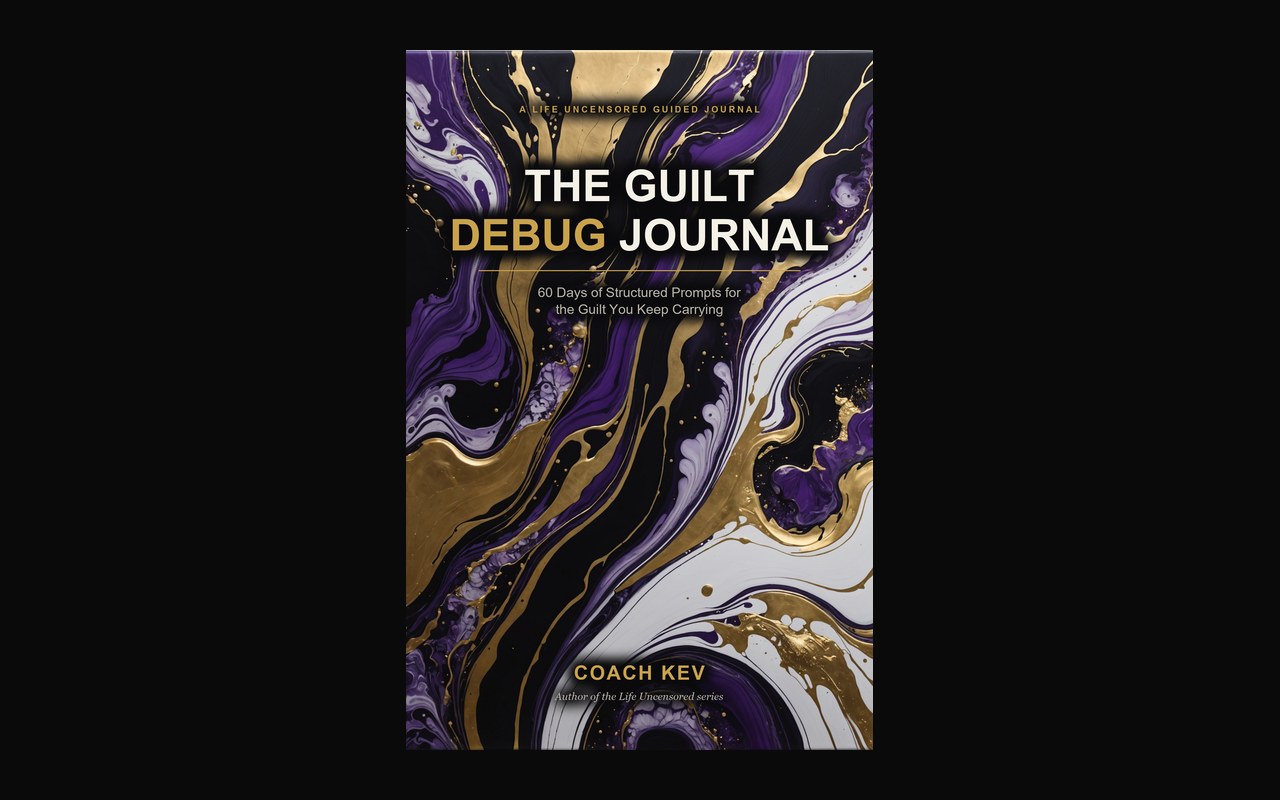
Cover shown for review. As an Amazon Associate, Coach Kev earns from qualifying purchases.
I do not usually put my own work in this slot, this space is for the books that changed how I coach, but I built something this month that belongs in the same conversation, so I am going to break it down the way I would break down anyone else's book, and let you decide if the case holds.
The Guilt Debug Journal started from a pattern I kept meeting in session after session, in people who were successful by every visible measure and still quietly serving a sentence for something they did, or failed to do, years earlier. The insight underneath it, and the one the whole sixty days is built on, is that guilt is not a verdict on who you are, it is a process, a background routine your nervous system runs to make you notice a rupture, repair it, and then power down. Research on moral emotions backs this functional read directly. June Tangney's work distinguishing guilt from shame, most fully laid out in Tangney and Dearing's Shame and Guilt, found that guilt orients a person toward the specific behavior and toward repair, while shame globalizes the same event into a verdict on the whole self and drives hiding instead. That distinction is not academic to the person living inside it, it is the difference between a fixable problem and a life sentence.
The trouble starts when the routine cannot complete. The person you would apologize to is gone, or the window closed, or the thing genuinely cannot be undone, and a routine with no exit condition does not simply stop, it keeps running in the background and bills you for it daily, in the overworking, in the inability to accept anything good, in the low hum of feeling like you still owe something you can never fully repay.
Where the book does its real work is in refusing to leave that insight as a nice idea and turning it into a repeatable practice, and I think this is the part worth paying attention to if you have tried therapy-speak about guilt before and found it too abstract to actually use. It sequences three moves into something you do daily instead of just understand intellectually. First, name the specific act plainly, no softening and no self-attack, because a vague global charge like I am a bad person cannot be repaired, only a named one can. Second, separate the act from the verdict, using exactly the guilt-versus-shame line above, so you can tell whether you are doing real accountability or just quietly punishing yourself for existing. Third, and this is the move I think most guilt resources skip entirely, find the value the alarm is protecting, because guilt only fires when you cross something you genuinely care about, which means underneath every real guilt is a compass, not just a punishment.
Every ten days the journal forces a checkpoint, where you go back through what you wrote the way you would review a log file hunting a root cause, looking specifically for where your handwriting got tight or your sentences got short, because that flinch is usually where the actual material is hiding. That structural choice, rereading your own record for the pattern instead of just generating new pages forever, is the single biggest difference between a journal that helps and a journal that just gives you somewhere to bleed.
What I would not oversell: this only works if you actually do the naming instead of writing around it, which is harder than it sounds on a day when the fog version feels safer. If you want something that will make the feeling go away without asking you to look at it directly, this is not built for that, and I would rather tell you that now than have you feel misled sixty pages in.
The rep, if you want to try it before you buy anything: write the specific thing you feel guilty about in one plain sentence, then write the one value underneath it that the guilt is actually defending. You will usually find the compass was there the whole time, buried under the punishment.
The Guilt Debug Journal is sixty days of exactly this, one honest page at a time, and it is live now on Amazon: https://www.amazon.com/dp/B0HB2LH5RJ?tag=cklu-ionos-20. I built it for the person everyone leans on, the one nobody thinks to ask who is carrying them, and if that is you, the thing I want you to take from this breakdown is simple: you are not paying a debt, you are running an unpatched process, and this is the patch.