You Will Not Get Over Them, and That Was Always the Wrong Goal: The Grief Debug Journal
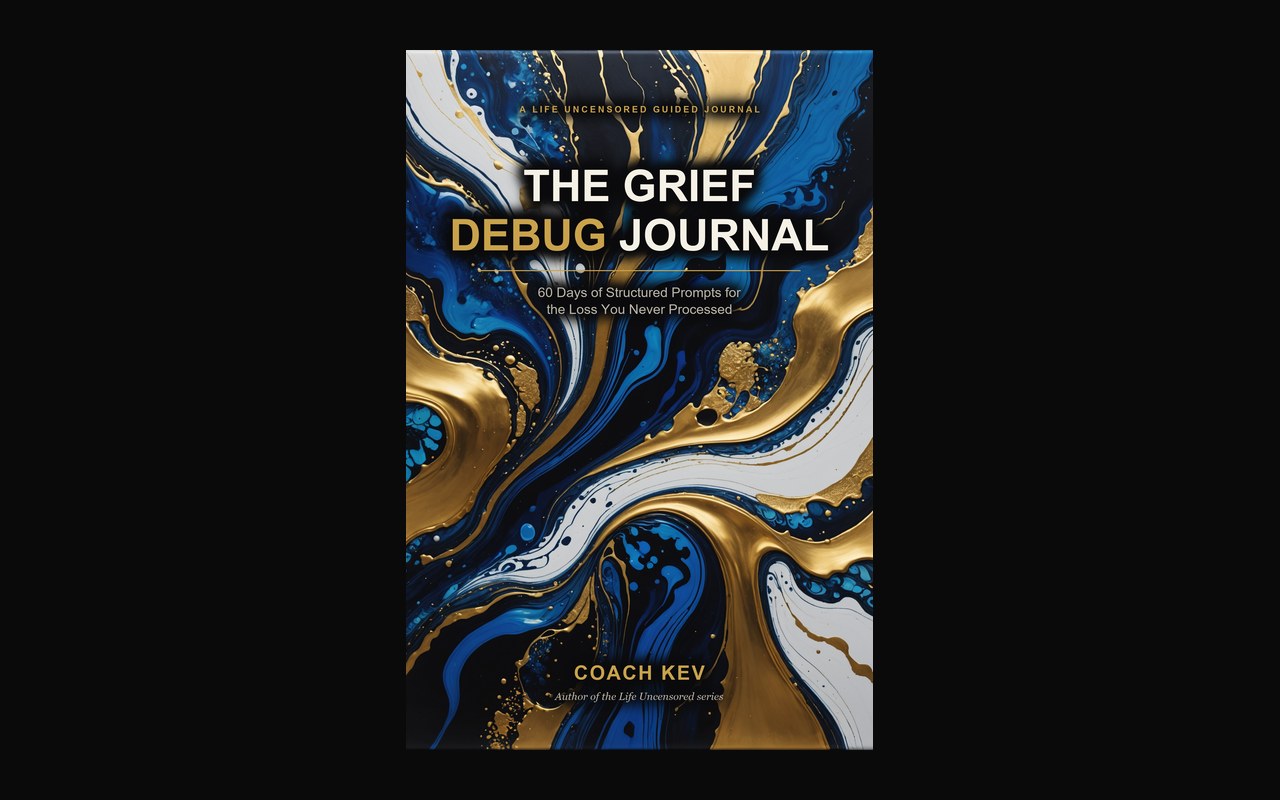
Cover shown for review. As an Amazon Associate, Coach Kev earns from qualifying purchases.
This is my own book, not someone else's, which breaks the usual rule of this column, but I want to hold it to the same standard I hold every book I recommend here, so here is the honest breakdown of The Grief Debug Journal and the research underneath it.
The starting premise is a direct rejection of the model most people are quietly grieving inside of, the idea that grief is a process you complete, five stages, a finish line, and then you are over it. Attachment researchers Dennis Klass, Phyllis Silverman, and Steven Nickman challenged that model directly in Continuing Bonds, their landmark collection on grief, arguing from real longitudinal observation that healthy mourning does not sever the bond with the person you lost, it reorganizes it, so the relationship continues in a different form instead of ending. That single reframe, that the goal was never disconnection, changes almost everything about what the actual work should look like.
If continuing the bond rather than severing it is the real goal, the obvious problem is that almost nothing teaches you how to actually do that, and this is where I think the book earns its place on the shelf rather than just restating the research. It does not treat grief as a mystery you survive until it fades, it treats it as a system you can open and work with, and it commits to that framing hard enough that the exercises genuinely follow from it instead of just decorating a familiar five-stages structure with new language.
What the book actually asks you to do, across sixty days, breaks into three load-bearing moves, and I think the sequencing is the smart part. Early on, the prompts insist on naming what is actually happening in plain, direct language instead of the vague fog most people describe grief in, because you cannot work with "my grief in general" the same way you can work with the specific moment you keep replaying at 2am. In the middle, the reframes turn deliberately mechanical, showing you what is actually happening under a wave of grief, what triggered it, what your nervous system is doing, on the theory that understanding the mechanism underneath a feeling is often the only thing that makes it survivable in the moment. Every ten days there is a checkpoint, a forced return to what you have already written, not to relive it but to read it for the pattern the way you would review a log file, and that structural choice, rereading your own record instead of just generating new pages forever, is the single biggest thing separating this from a journal that just gives you somewhere to bleed.
Where I think the book asks something real of you: this is not a passive read. The checkpoints only work if you actually go back and reread what you wrote instead of skipping ahead, and the daily prompts only do their job if you write the specific thing instead of the safe, vague version of it. If you are looking for something to comfort you without asking anything back, this is not that book, and I would rather say that plainly than oversell it.
The rep, if you want to test the premise before you buy anything: instead of asking yourself when will I get over this, ask what would it look like to build a relationship with this loss instead of trying to end one. Most people have never been given permission to ask that question, and the relief of asking it is immediate even before you have an answer.
The Grief Debug Journal is live on Amazon now: https://www.amazon.com/dp/B0H9FRYV2X?tag=cklu-ionos-20, sixty days of structured prompts built for the person everyone leans on, the one nobody thinks to ask who is leaning on them. You will not get over the person you lost, that framing was always a lie sold to you by a culture uncomfortable with unresolved things. What you build instead is a system that can hold them and still move forward, and that is not moving on, that is moving with.